Causes, Effects, and Solutions for Pot Belly
Learn the main reasons for a pot belly, its health effects, and effective solutions to reduce it.
1. Causes of Pot Belly
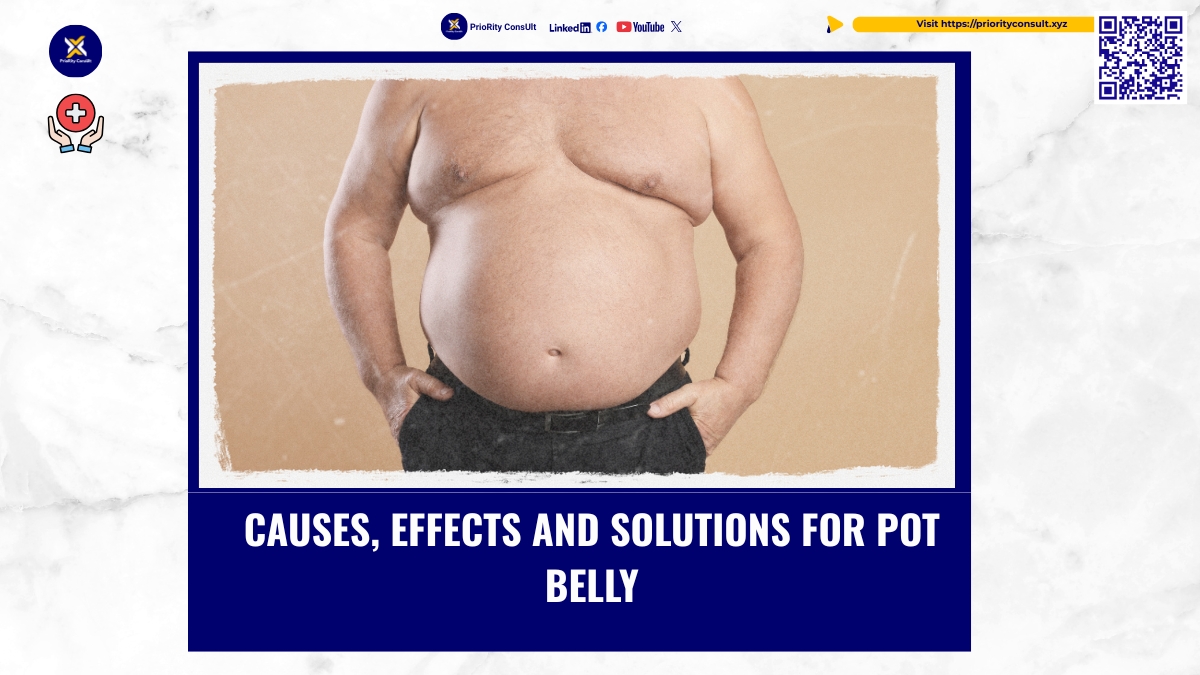
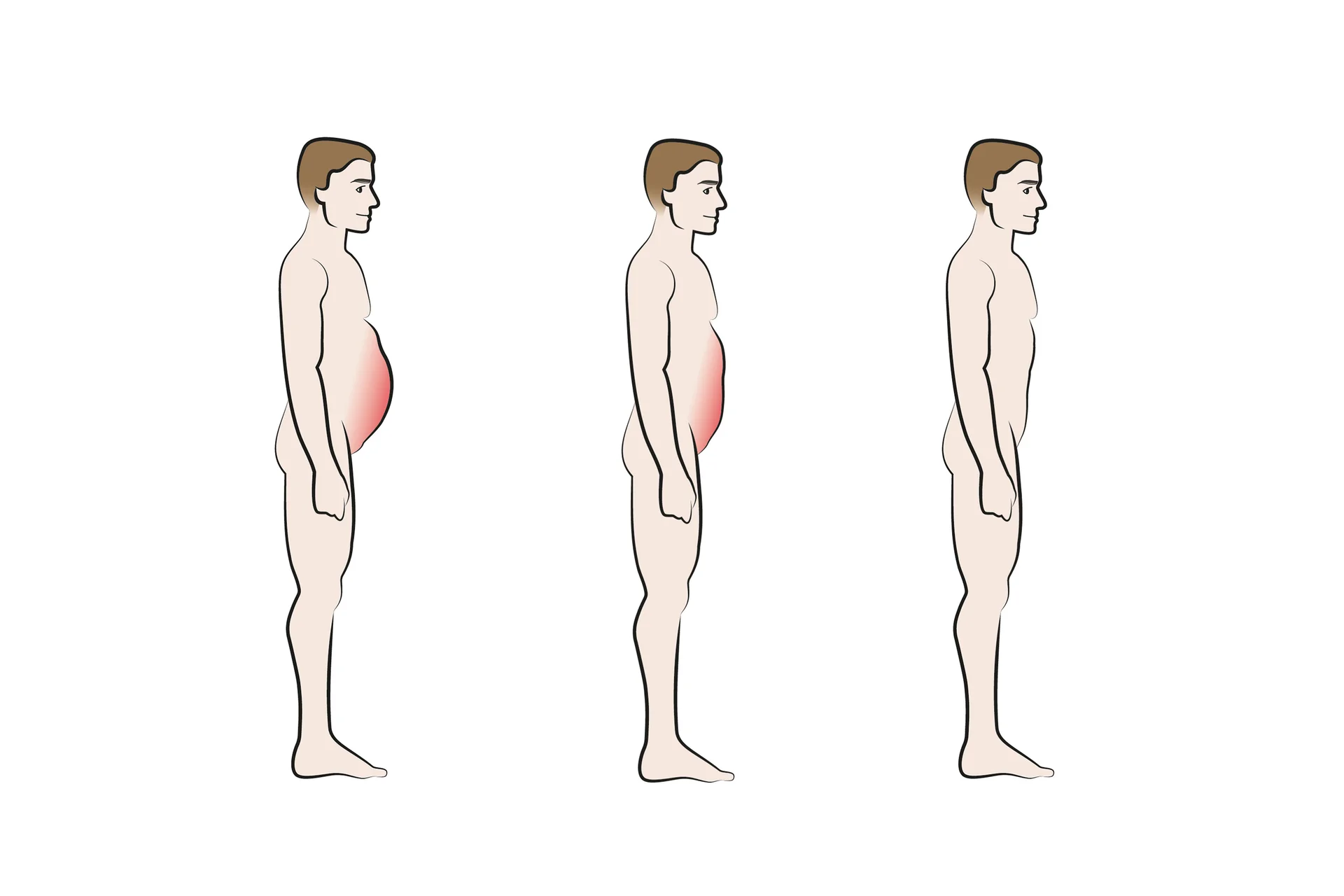
A pot belly (excess abdominal fat) can develop due to multiple factors:
- Unhealthy diet / calorie excess: Eating more calories than your body burns, especially from processed foods and sugary drinks.
- Lack of exercise / sedentary lifestyle: Low physical activity leads to fat accumulation around the abdomen.
- Excess alcohol consumption: Alcohol adds empty calories and promotes visceral fat storage.
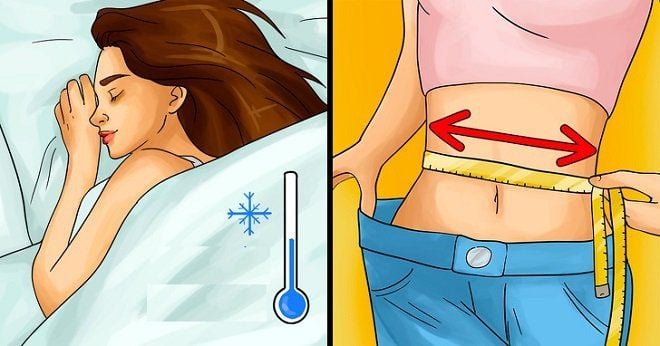
- Stress and poor sleep: High cortisol levels and insufficient sleep encourage belly fat accumulation.
- Hormonal changes / genetics / age: Ageing, menopause, low testosterone, and genetic predisposition can increase abdominal fat.
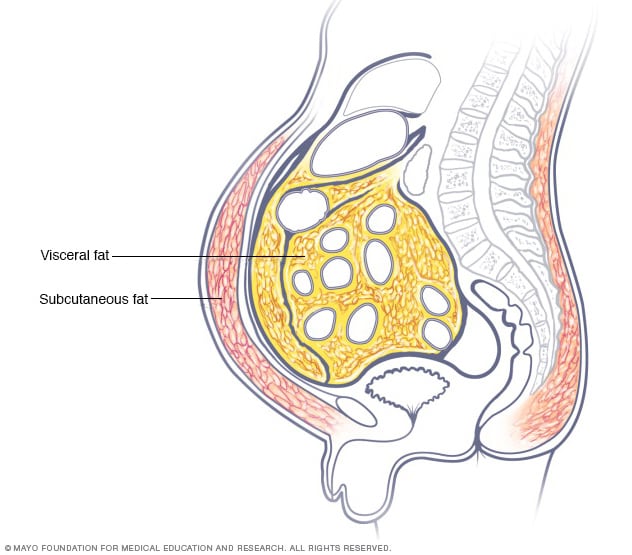
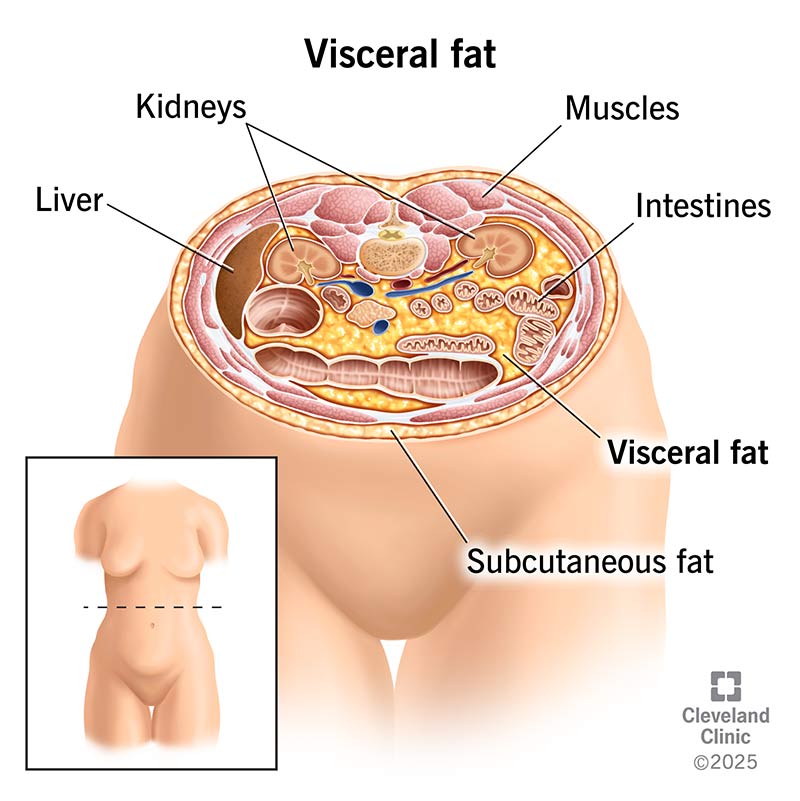
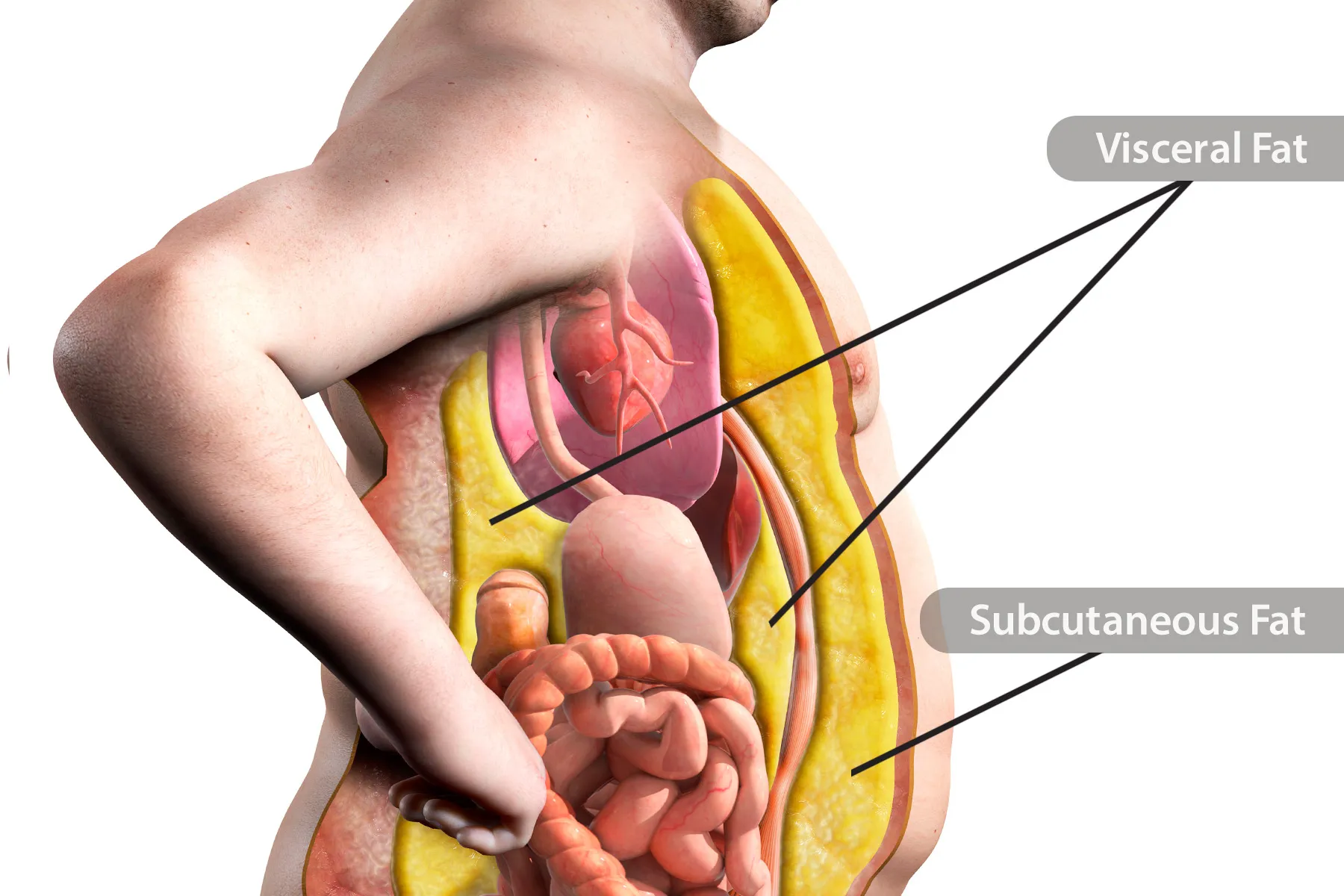
- Visceral vs subcutaneous fat: Fat stored deep inside around organs is especially risky.
- Postural issues: Weak core muscles or poor posture may exaggerate the belly appearance.
2. Effects of Pot Belly
Accumulating abdominal fat is not just cosmetic; it affects health in several ways:
- Cardiovascular risks: Higher chance of heart disease, stroke, and high blood pressure.
- Metabolic dysfunction: Visceral fat can cause insulin resistance, inflammation, and diabetes.
- Muscle and ageing effects: Reduced muscle mass and mobility with age increase belly fat accumulation.
- Psychological impact: Body image concerns, low self-esteem, and reduced energy levels.
3. Solutions to Reduce Pot Belly
Here are evidence-based strategies to reduce abdominal fat:
a) Diet & Nutrition
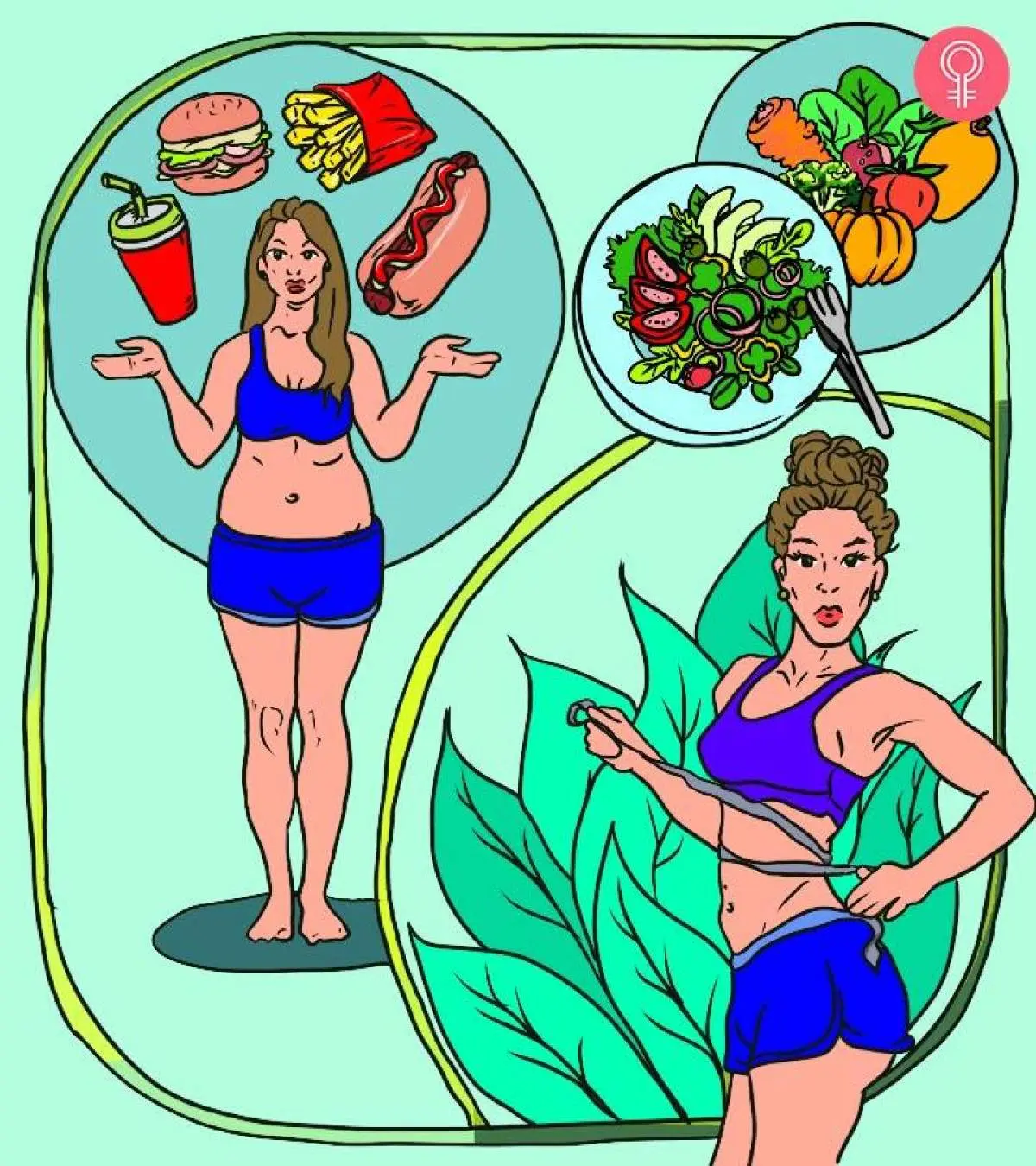
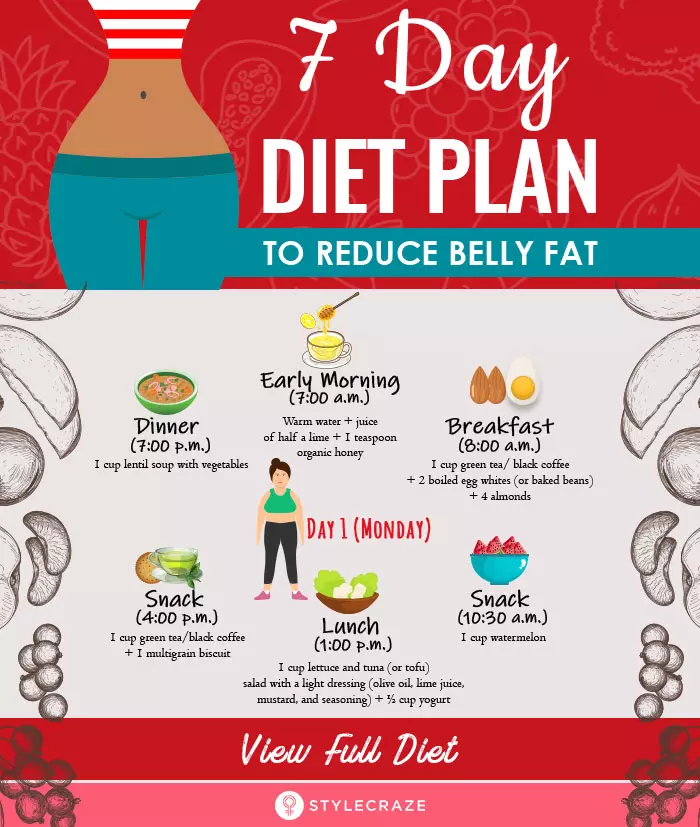
- Increase soluble fibre intake (oats, legumes, vegetables).
- Avoid trans fats, refined carbs, and high sugar foods.
- Eat higher-protein meals to maintain muscle mass and boost metabolism.
- Moderate alcohol consumption.
- Drink water and practice mindful eating.
b) Physical Activity & Exercise
- Combine cardio (walking, jogging, cycling) with strength training (weights, resistance exercises).
- Incorporate core exercises for posture and muscle tone.
- Stay active throughout the day, reduce prolonged sitting.
c) Lifestyle & Habits
- Prioritize quality sleep (7-9 hours per night).
- Manage stress through meditation, yoga, or deep breathing.
- Be consistent with healthy habits.

d) Monitoring & Maintenance
- Measure waist circumference regularly to track progress.
- Set realistic goals and avoid crash diets.

e) Medical Options
- In some cases, cosmetic procedures like liposuction or fat-freezing may help, but lifestyle changes remain essential.