

Small changes in how you prepare and consume everyday foods can significantly improve nutrient absorption, digestion, and overall health. Here’s how to get the most out of some common staples.
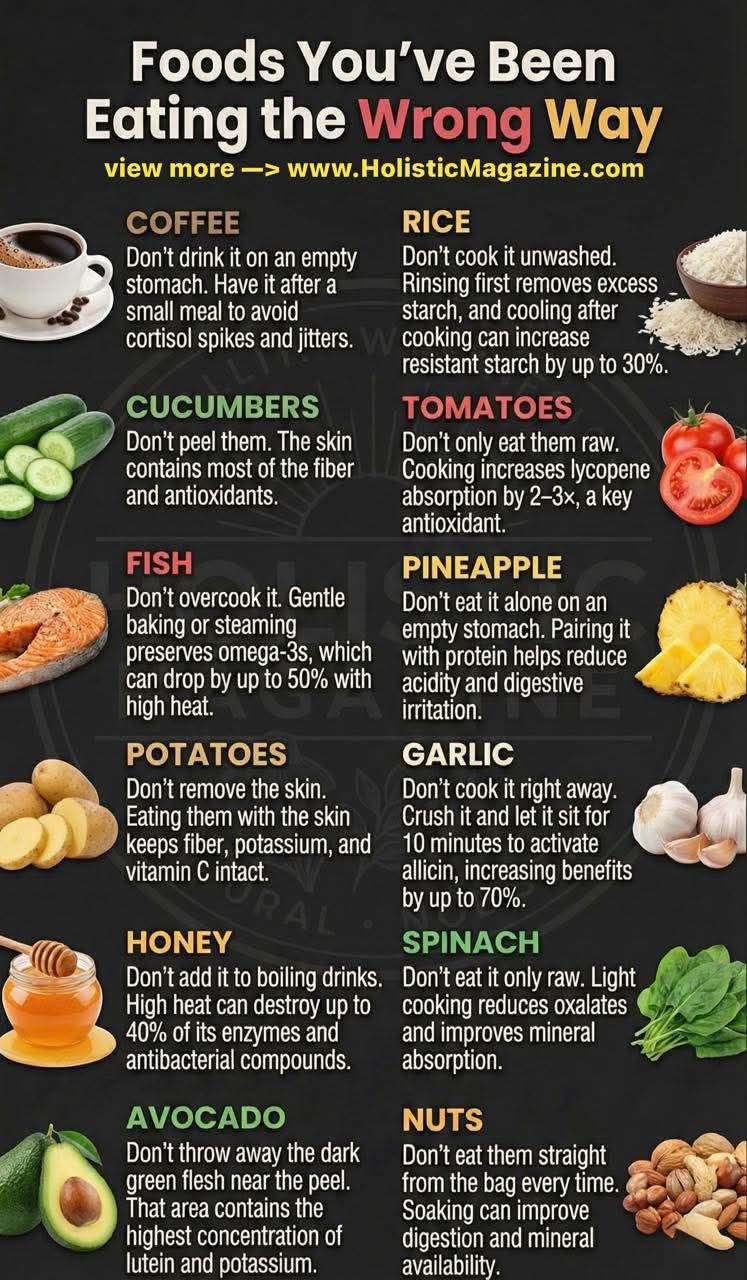
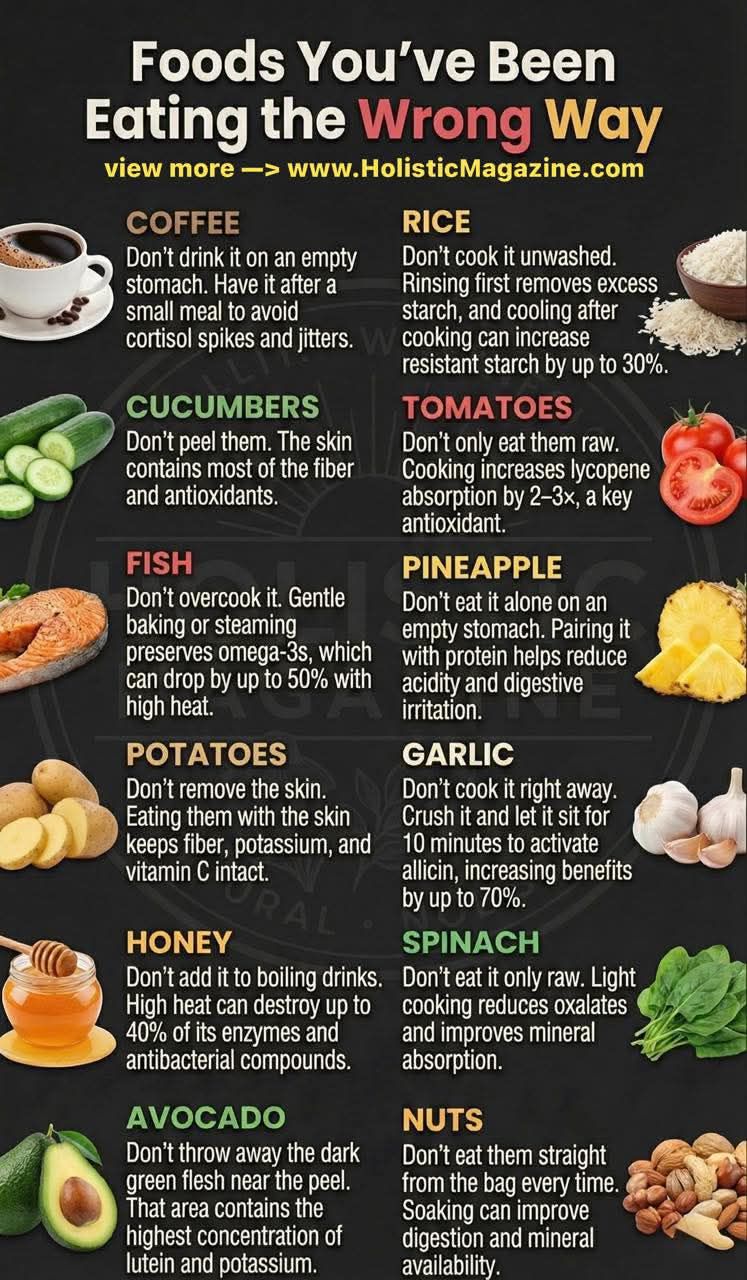
Coffee
Avoid drinking coffee on an empty stomach.
Have it after a small meal to help prevent cortisol spikes, jitters, and digestive discomfort.
Rice
Don’t cook rice without washing it first.
Rinsing removes excess surface starch. Cooling cooked rice before eating can increase resistant starch content by up to 30%, which may benefit gut health.
Cucumbers
Don’t peel them.
The skin contains most of the fiber and antioxidants.
Tomatoes
Don’t eat them only raw.
Cooking tomatoes increases lycopene absorption by 2–3 times. Lycopene is a powerful antioxidant linked to heart and cellular health.
Fish
Avoid overcooking.
Gentle methods such as baking or steaming help preserve omega-3 fatty acids, which can be reduced by up to 50% with high heat.
Pineapple
Don’t eat it alone on an empty stomach.
Pairing pineapple with protein can reduce acidity and digestive irritation.
Potatoes
Keep the skin on.
Eating potatoes with the skin preserves fiber, potassium, and vitamin C.
Garlic
Don’t cook it immediately after chopping.
Crush or chop garlic and let it rest for about 10 minutes to activate allicin, a compound that significantly boosts its health benefits.
Honey
Don’t add it to boiling liquids.
High heat can destroy up to 40% of honey’s enzymes and antibacterial properties. Add it after beverages have cooled slightly.
Spinach
Don’t eat it only raw.
Light cooking reduces oxalates and improves mineral absorption, especially iron and calcium.
Avocado
Don’t discard the dark green flesh near the peel.
This portion contains the highest concentration of lutein and potassium.
Nuts
Don’t always eat them straight from the bag.
Soaking nuts can improve digestion and increase mineral bioavailability.
By kaaKyiRe✍