

Input and Output Devices
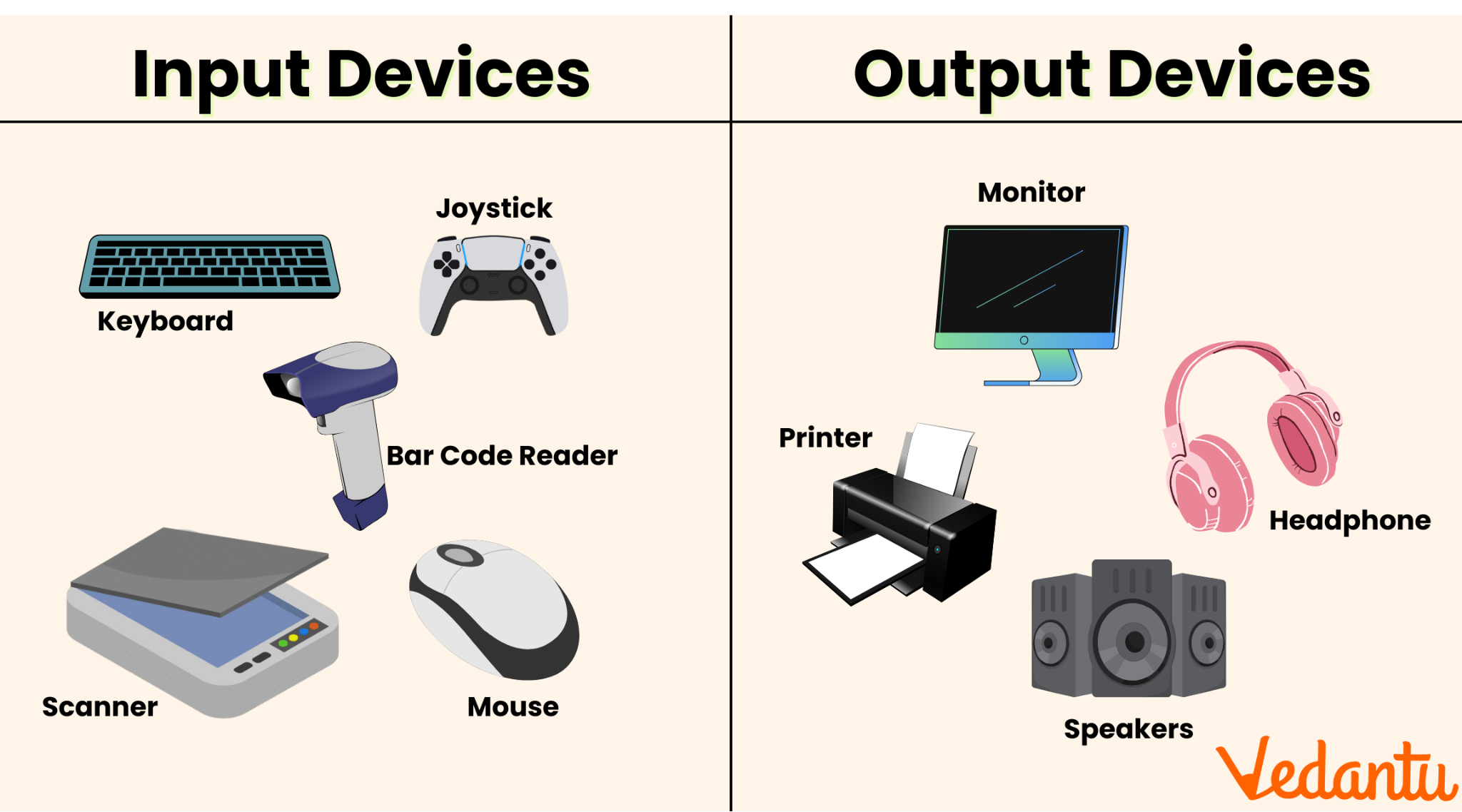
Input and output devices are essential components of a computer system. They allow users to interact with the system and receive feedback from it. Input devices send data to the computer, while output devices receive data from the computer and present it in a usable form.
Input Devices
Input devices are hardware components used to provide data and control signals to a computer system. They are the primary means through which users communicate with computers.
Common examples include:
• Keyboard – Used to enter text and commands.
• Mouse – Used to point, click, and interact with graphical elements on the screen.
• Scanner – Converts physical documents and images into digital format.
• Microphone – Captures audio input for processing or communication.
• Webcam – Captures video input for video conferencing and recording.

Output Devices
Output devices are hardware components that convey information from the computer to the user or another device. They display, project, or physically reproduce the results of the computer's processes.
Common examples include:
• Monitor – Displays visual output such as text, images, and videos.
• Printer – Produces a physical copy (hard copy) of digital documents and images.
• Speakers – Output audio from the computer.
• Projector – Projects visual output onto a larger surface for presentations or viewing.
• Headphones – Provide audio output privately to the user.

Conclusion
Input and output devices play a crucial role in the operation of a computer system. They enable communication between the user and the system, making computing tasks more interactive and efficient.
References
1. V. Rajaraman, 'Fundamentals of Computers', PHI Learning Pvt. Ltd., 2014.
2. C.S. French, 'Computer Science', Nelson Thornes, 2000.
3. https://www.techtarget.com/searchcio/definition/input-output-I-O
4. https://www.geeksforgeeks.org/input-and-output-devices-of-computer/



