
The December 2025 National Tracking Poll by Global InfoAnalytics offers a comprehensive assessment of Ghana’s political, economic and social climate as the year closes, depicting a country broadly confident in its direction yet sharply polarised along partisan lines and increasingly impatient for systemic reform.
The survey, conducted among 13,495 voters across all 16 regions and 83 constituencies, highlights strong public approval for President John Dramani Mahama, growing optimism about living standards, and widespread support for constitutional change, even as party loyalty continues to shape perceptions of national progress.
Broad Optimism, Deep Political Fault Lines
However, the data expose a pronounced partisan divide. While 91 per cent of NDC supporters believe the country is on the right path, 61 per cent of NPP supporters hold the opposite view. Floating voters, who now represent a growing share of the electorate, lean toward optimism, with 68 per cent endorsing the country’s current direction.
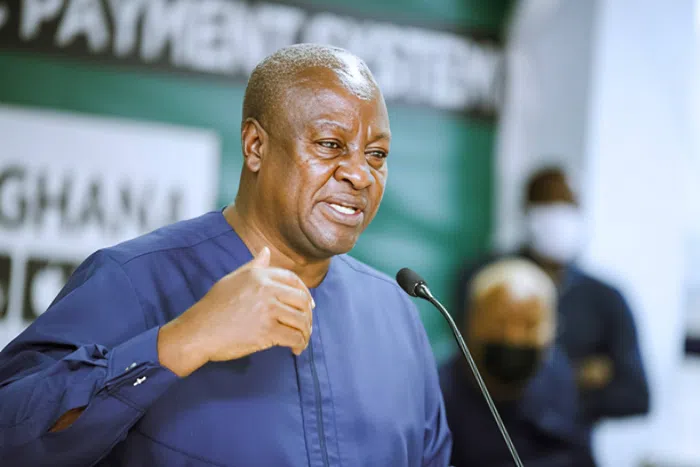
Mahama Retains Solid Mandate
Yet, party allegiance remains decisive. Approval reaches 93 per cent among NDC supporters but drops to 28 per cent among NPP voters. Among floating voters, the president records a robust 69 per cent approval. Although disapproval has edged up slightly to 24 per cent, the overall figures confirm a firm governing mandate.
Economy Anchors Public Confidence
This confidence is reflected in household conditions. A majority of voters (56 per cent) report an improvement in their standard of living over the past year, while 27 per cent see no change and 12 per cent say conditions have worsened. Looking ahead, optimism deepens: 70 per cent expect further improvements in 2026, compared with 18 per cent who anticipate decline.
Governance: Corruption and Galamsey
Perceptions around illegal mining, or galamsey, also suggest cautious approval. Nationally, 47 per cent of voters do not believe the problem has worsened under the current administration, a view echoed by 43 per cent in mining regions. Overall, 56 per cent say the government’s response has been adequate.
Strong Backing for Constitutional Change
Perhaps the clearest signal from the poll is the public’s appetite for structural reform. Voters express strong support for key proposals from the Constitutional Review Commission, including:
-
Extending the presidential term to five years (57 per cent).
-
Preventing MPs from holding ministerial positions to strengthen separation of powers (58 per cent).
-
Direct election of MMDCEs to deepen decentralisation (63 per cent).
-
Lowering the minimum age to contest the presidency to boost youth participation (55 per cent).
-
Abolishing the death penalty (58 per cent) and restricting campaigns to 120 days before elections (56 per cent).
Youth Redefining the Political Landscape
At the same time, party allegiances are in flux. The NDC leads with 41 per cent affiliation, despite a slight dip, while the NPP has declined for a third consecutive period to 26 per cent. Floating voters have risen to 19 per cent, reinforcing their growing influence.
Educational patterns reveal a decisive NDC advantage among tertiary-educated voters, leading the NPP by 22 points, and a similar edge among JHS and SHS graduates. The NPP’s strongest base remains among voters without formal education, where the gap narrows to a single point.
Outlook: Confidence with Conditions
Overall, the December 2025 Global InfoAnalytics poll portrays a nation that is confident in its immediate direction and broadly supportive of its leadership, particularly on economic management and governance.
With a youth-heavy electorate demanding accountability, inclusion and institutional change, Ghana appears to be entering a phase in which political legitimacy will be increasingly measured not only by performance, but by the willingness of leaders to undertake deep, structural reform.
By kaaKyiRe Ransford✍
Source:
Pulse Ghana🔼