
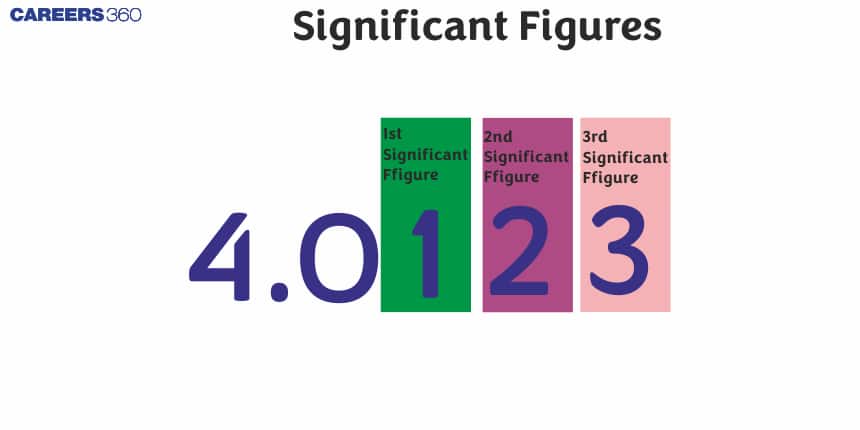
Lesson Note: Significant Figures
Class: JHS / SHS (Foundation) | Duration: 60 minutes
Learning Objectives
- Explain what significant figures (s.f.) are.
- Identify significant digits in a number.
- Round numbers correctly to a required number of significant figures.
- Apply s.f. rules in calculation and measurement contexts.
What are Significant Figures?
Significant figures are the digits in a number that carry meaningful information about its precision. They indicate how accurately the value is known.
Quick rules (summary)
- All non-zero digits are significant.
Example: \(123\) → 3 s.f. - Zeros between non-zero digits are significant.
Example: \(204\) → 3 s.f. - Leading zeros are not significant.
Example: \(0.0045\) → 2 s.f. (digits 4 and 5) - Trailing zeros in a decimal number are significant.
Example: \(45.00\) → 4 s.f. - Trailing zeros in a whole number without a decimal point are ambiguous; by convention such trailing zeros are usually not counted unless a decimal point is shown (e.g. \(2500\) often → 2 s.f.; whereas \(2500.\) → 4 s.f.).
Counting Significant Figures — Examples
- \(120\) → usually \(2\) s.f. (1 and 2) unless written \(120.\) which shows \(3\) s.f.
- \(0.00340\) → \(3\) s.f. (3, 4, 0 — the trailing zero after decimal is significant)
- \(5080\) → \(3\) s.f. (5, 0, 8) — zero between digits counts; the final zero is ambiguous unless a decimal is present
- \(72.030\) → \(5\) s.f. (7,2,0,3,0)
- \(400.0\) → \(4\) s.f. (the decimal shows all trailing zeros are significant)
Rounding to a given number of significant figures
Steps to round to \(n\) significant figures:
- Find the first non-zero digit — count digits from there.
- Keep the first \(n\) digits (starting from that first non-zero), look at the next digit (the rounding digit).
- If the rounding digit is \(5\) or more, round the last kept digit up by 1. If less than \(5\), leave it.
- Replace kept digits after the last kept place by zeros if the place is left of the decimal point; keep decimals for places right of the decimal point.
Worked examples
- Round \(63.784\) to \(3\) s.f.: keep digits \(6,3,7\). Next digit = \(8\) (\(\ge 5\)) so round up: \[ 63.784 \longrightarrow 63.8 \]
- Round \(0.004563\) to \(2\) s.f.: ignore leading zeros; keep \(4,5\). Next digit = \(6\) → round up: \[ 0.004563 \longrightarrow 0.0046 \]
- Round \(52810\) to \(3\) s.f.: keep \(5,2,8\). Next digit = \(1\) (\(<5\)) → no change: \[ 52810 \longrightarrow 52800 \] (two zeros replace the less significant digits)
- Round \(0.09045\) to \(3\) s.f.: first non-zero digits are \(9,0,4\), next digit = \(5\) → round up: \[ 0.09045 \longrightarrow 0.0905 \]
Class Activities (Group work)
Ask students to work in small groups for 8–12 minutes on these tasks:
- Identify the number of significant figures in each of these numbers: \(120\), \(0.00340\), \(5080\), \(72.030\), \(0.0086\), \(400.0\).
- Round the following to 2 s.f.: \(4.678\), \(0.00985\), \(6785\), \(52.49\), \(0.0491\), \(109.3\).
- Round the following to 3 s.f.: \(498.27\), \(0.003456\), \(89.995\), \(12004\), \(0.0005642\).
Exercises
A. Count the significant figures
- \(120\)
- \(0.00340\)
- \(5080\)
- \(72.030\)
- \(0.0086\)
- \(400.0\)
Answers — Click to reveal
- \(120 \rightarrow 2\) s.f. (unless \(120.\) then 3 s.f.)
- \(0.00340 \rightarrow 3\) s.f.
- \(5080 \rightarrow 3\) s.f. (final zero ambiguous without decimal)
- \(72.030 \rightarrow 5\) s.f.
- \(0.0086 \rightarrow 2\) s.f.
- \(400.0 \rightarrow 4\) s.f.
B. Round to 2 significant figures
- \(4.678\)
- \(0.00985\)
- \(6785\)
- \(52.49\)
- \(0.0491\)
- \(109.3\)
Answers — Click to reveal
- \(4.678 \rightarrow 4.7\)
- \(0.00985 \rightarrow 0.0099\)
- \(6785 \rightarrow 6800\)
- \(52.49 \rightarrow 52\)
- \(0.0491 \rightarrow 0.049\)
- \(109.3 \rightarrow 110\)
C. Round to 3 significant figures
- \(498.27\)
- \(0.003456\)
- \(89.995\)
- \(12004\)
- \(0.0005642\)
Answers — Click to reveal
- \(498.27 \rightarrow 498\)
- \(0.003456 \rightarrow 0.00346\)
- \(89.995 \rightarrow 90.0\) (note: to show 3 s.f. keep one decimal place)
- \(12004 \rightarrow 12000\)
- \(0.0005642 \rightarrow 0.000564\)
Additional Guidance & Tips
- When giving answers in scientific or examination work, show the number of significant figures clearly — sometimes use scientific notation to remove ambiguity (for example, \(2.50\times10^3\) clearly has 3 s.f.).
- For whole numbers where trailing zeros are significant, a decimal point can be used to show that they are intended to be significant: e.g. \(2500.\) has 4 s.f.; \(2500\) (no decimal) usually has 2 s.f.
- When performing calculations: keep one extra digit during intermediate steps and round only the final answer to the required s.f. to reduce rounding error.
Homework
Round these to 3 significant figures:
- \(9012.6\)
- \(0.0007629\)
- \(34.499\)
- \(5.005\)
- \(876.51\)
Answers
- \(9012.6 \rightarrow 9010\)
- \(0.0007629 \rightarrow 0.000763\)
- \(34.499 \rightarrow 34.5\)
- \(5.005 \rightarrow 5.01\)
- \(876.51 \rightarrow 877\)



