
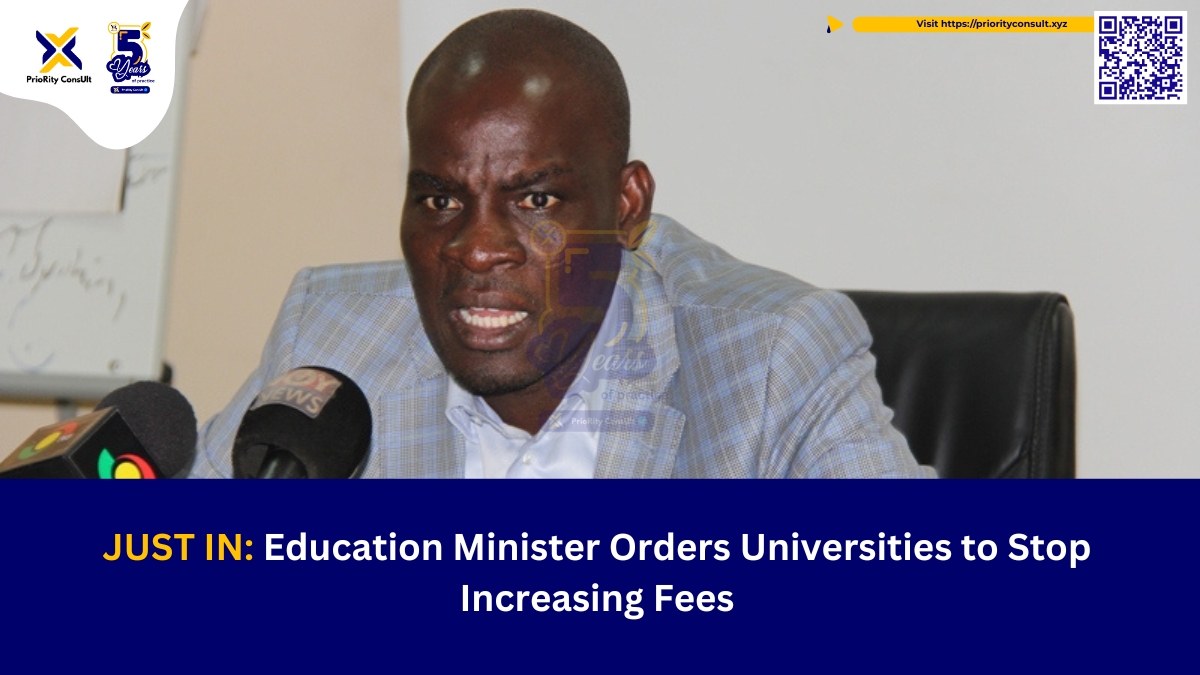
Education Minister Orders Universities to Stop Increasing Fees
In a significant development for Ghana’s education sector, the Minister of Education, Hon. Haruna Iddrisu, has directed all public universities to halt any unauthorized increases in tuition and other academic fees. This decision follows growing concerns from students, parents, and advocacy groups about the rising cost of tertiary education across the country.
According to the Ministry, the directive was issued through the Ghana Tertiary Education Commission (GTEC), which serves as the regulatory body for tertiary institutions. The Minister emphasized that no public university has the authority to adjust its fees without formal approval from GTEC and the Ministry of Finance. Any institution that has already implemented new fee structures without such authorization has been asked to revert to the approved rates immediately.
This intervention comes amid reports that some public universities had imposed fresh fee increases for the 2025/2026 academic year, citing inflation and operational costs. However, the Education Ministry insists that the government’s focus is on making tertiary education more accessible and affordable, especially at a time when many households are still recovering from economic challenges.
Hon. Haruna Iddrisu reiterated the government’s commitment to protecting students from financial exploitation and ensuring fairness in the administration of higher education. He noted that the Ministry is working closely with GTEC to monitor and regulate tuition policies, ensuring that any future adjustments are based on proper consultation and approval processes.
The Ghana Tertiary Education Commission has also confirmed that it has issued official directives to all university councils to comply with the Minister’s instruction. Universities that fail to adhere to this order risk sanctions or the withdrawal of approval for their proposed academic fees.
This move has been widely welcomed by student unions and parents, who have often described tuition hikes as a major barrier to higher education. Many believe the directive reflects the government’s effort to strengthen accountability and fairness within the education system.
However, some university administrators have raised concerns about sustainability, arguing that the freeze on fee increments may affect the institutions’ ability to maintain facilities, pay staff, and improve academic resources. They have called for increased government subvention and financial support to offset operational costs.
Despite these differing opinions, the Ministry’s decision sends a clear message: education in Ghana must remain accessible, fair, and within the reach of all students. The ongoing dialogue between universities, government, and student bodies is expected to yield a balanced solution that supports both institutional growth and affordability.
As the new academic year approaches, students and parents alike will be watching closely to see how universities respond to this directive and how the government ensures compliance across all tertiary institutions.
References
-
Ghana Tertiary Education Commission (GTEC) press release, November 2025.
-
Ministry of Education directive to public universities, 2025.
-
Interviews with student representatives and education analysts (2025).



