
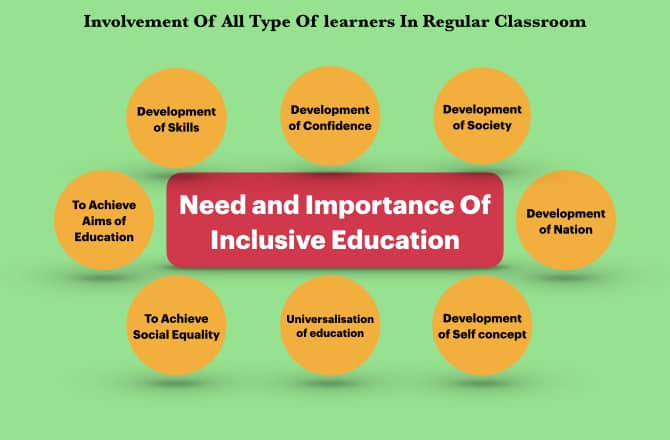

Note on Inclusive Education
Inclusive education is an educational approach that ensures all students, regardless of their physical, intellectual, social, emotional, linguistic, or other conditions, learn together in the same age-appropriate classrooms. It values diversity and the unique contributions each student brings to the learning environment.
Key Features of Inclusive Education:
- Equal Access: All children have the right to access quality education, including those with disabilities and special needs.
- Supportive Environment: Teachers use flexible teaching methods and provide necessary support to meet individual learning needs.
- Collaborative Learning: Encourages cooperation among students of all abilities, fostering empathy, respect, and social integration.
- Non-discrimination: Focuses on removing barriers and prejudices that exclude students from participating fully in school life.

Benefits:
- Promotes equity and respect for diversity.
- Improves academic and social outcomes for all learners.
- Builds a more just and inclusive society.
Conclusion: Inclusive education is not just about physical placement in regular classrooms but about meaningful participation and achieving learning goals.



