
“Critic or Combatant? The Doctor Sent Straight to the Battlefield in Burkina Faso”
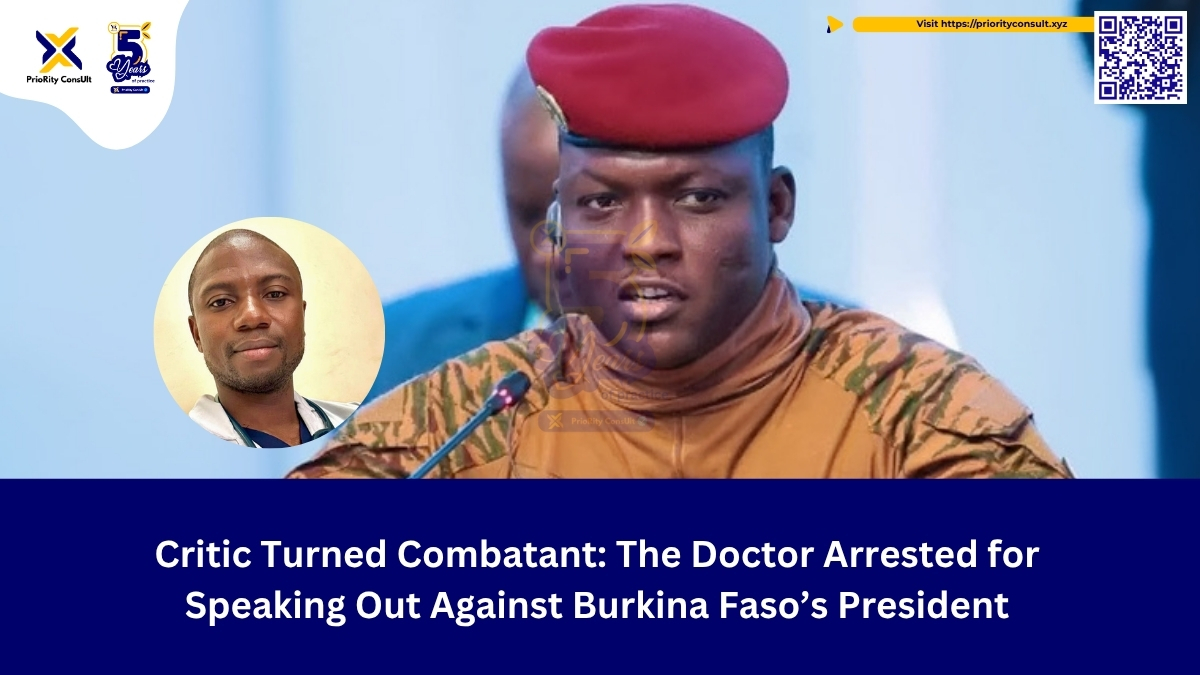
In a startling turn of events in Burkina Faso, a doctor who publicly criticized President Captain Ibrahim Traoré for failing to tackle the country’s escalating terrorism crisis has been arrested and sent straight to the battlefield. The incident has left citizens and international observers both shocked and intrigued, raising questions about freedom of speech, civic duty, and the measures a government can take to enforce its authority.
Reports indicate that the doctor had openly expressed frustration over the administration’s inability to curb jihadist attacks that have terrorized communities across the nation. His criticism, which circulated widely on social media, seemed to challenge the president’s leadership at a critical time when security concerns dominate national attention.
President Traoré reportedly responded with a strikingly direct statement:
“If the doctor thinks he knows better, let him contribute directly!”
In what some see as a literal interpretation of his words, security forces reportedly arrested the doctor, put him through rapid military training, and deployed him to active combat zones. This extraordinary action has sparked intense debate. Supporters of the move argue that it demonstrates shared responsibility in a nation under siege, while critics warn that it represents a dangerous precedent, using coercion to silence dissent and punish free expression.
The episode highlights the tense reality in Burkina Faso, where the battle against terrorism is ongoing and the government faces criticism for its handling of national security. It also forces a larger conversation about the balance between civic criticism and national service, and whether governments can—or should—compel citizens to prove loyalty through action.
Ultimately, the story of the doctor-turned-soldier has become emblematic of the delicate and sometimes perilous line between patriotism and oppression, illustrating the human cost when dissent meets authoritarian resolve.